Star Wars Jedi Fallen Order System Requirements & PC Benchmark
// SYSTEM DATA ANALYSIS //
> MINIMUM REQ.
CPU: AMD FX-6100
GPU: AMD Radeon HD 7750
RAM: 8
> RECOMMENDED
CPU: AMD Ryzen 7 1700
GPU: AMD Radeon RX Vega 56
RAM: 16
// PROFESSIONAL_ANALYSIS //
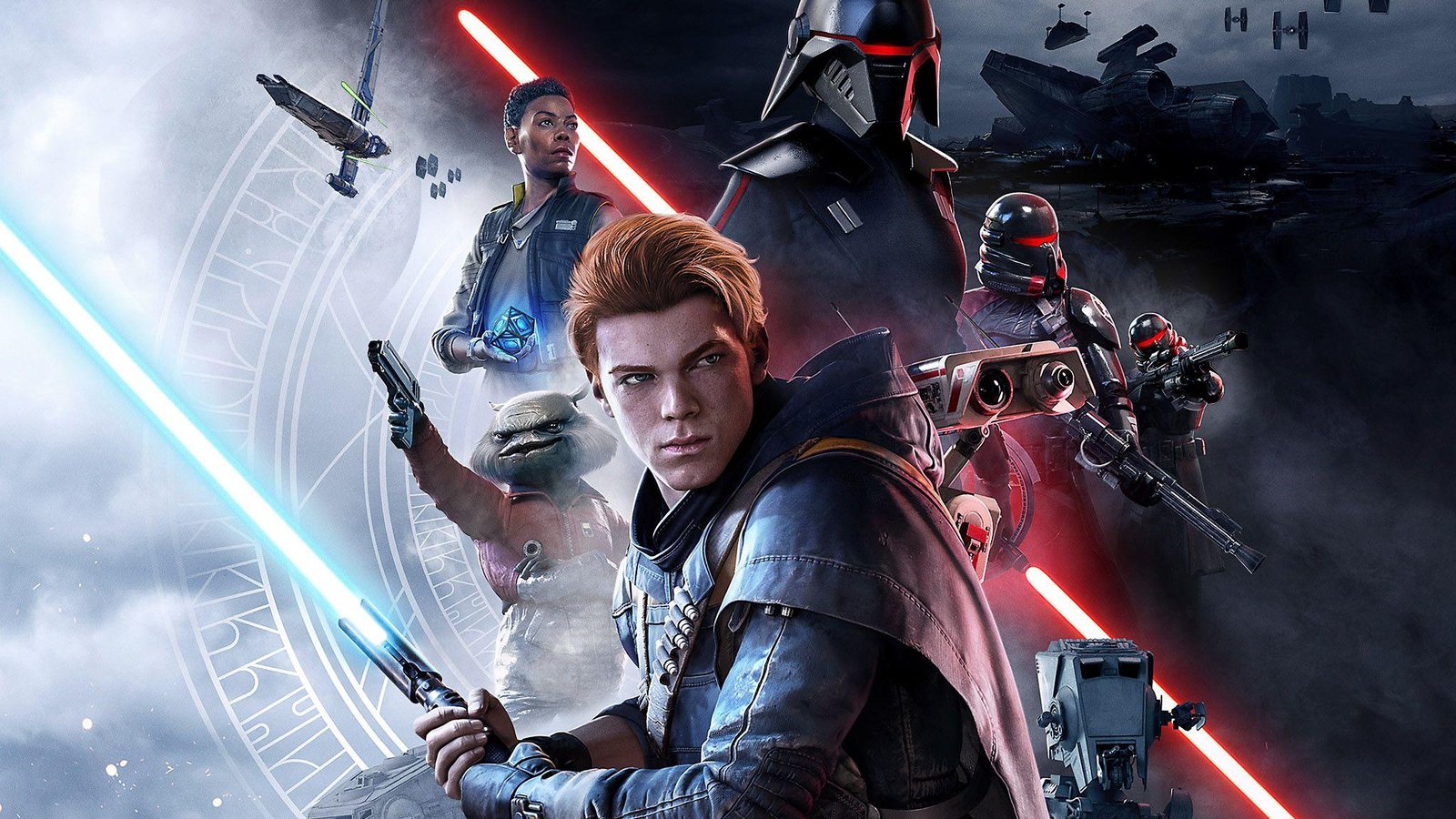
Star Wars Jedi: Fallen Order is Respawn Entertainment’s acclaimed third-person action-adventure, chronicling the journey of surviving Jedi Padawan Cal Kestis across the galaxy. Powered by Unreal Engine 4, the title delivers cinematic lightsaber combat, intricate traversal mechanics, and exotic alien landscapes spanning Bogano, Kashyyyk, and Dathomir. However, its expansive interconnected level design reveals notable PC optimization considerations. Test your hardware against our verified catalog on PCRunIt PC games.
Star Wars Jedi: Fallen Order System Requirements Breakdown
The minimum system requirements target a 720p or 1080p 30 FPS baseline on Low presets, calling for an Intel Core i3-3220 or AMD FX-6100 processor, an NVIDIA GeForce GTX 650 Ti or AMD Radeon HD 7750, and 8 GB of RAM. While accessible, this entry-level configuration struggles significantly during cinematic combat encounters featuring multiple purge troopers.
To experience fluid lightsaber duels at 1080p 60 FPS on Epic settings, Respawn Entertainment recommends an Intel Core i7-6700K or AMD Ryzen 7 1700, an NVIDIA GeForce GTX 1070 (8 GB VRAM) or AMD Radeon RX Vega 56, and 16 GB of dual-channel system memory. Storage is modest by contemporary standards at 55 GB. Installing on an NVMe SSD is essential to minimize notorious Unreal Engine asset streaming hitches when transitioning between interconnected planet sectors.
Hardware Bottlenecks & Unreal Engine 4 Traversal Stutter
Star Wars Jedi: Fallen Order is visually striking, but its performance profile is heavily characterized by traversal-related CPU hitches. As Cal Kestis sprints or slides through subterranean tomb corridors and elevator shafts, Unreal Engine 4 dynamically streams massive asset packages in the background.
This real-time streaming mechanism causes sharp single-thread CPU spikes and brief shader compilation hitches, resulting in visible micro-stutters during level transitions regardless of raw GPU power. In visually dense open environments like the Kashyyyk Wookiee refinery or Zeffo ruins, high-polygon rock formations and dynamic lightsaber reflections place sustained demand on GPU rasterization. This balance of traversal streaming and cinematic combat reflects the hardware profiles observed in futuristic open-world frontiers like Cyberpunk 2077 and atmospheric third-person survival adventures like Resident Evil 2.
FPS Optimization Tips / Best Performance Settings
- Cap Frame Rate to Monitor Refresh Rate: Locking your frame rate to 60 FPS, 120 FPS, or 144 FPS stabilizes frame delivery and mitigates traversal pacing jumps.
- Lower Shadow Quality from Epic to High: Setting Shadow Quality to High recovers 8% to 12% GPU headroom with negligible loss in lightsaber shadow definition.
- Turn Off Motion Blur: Disabling motion blur sharpens fast lightsaber parry animations and clarifies enemy attack telegraphs.
- Install on a High-Speed NVMe SSD: Fast solid-state storage significantly shortens background asset streaming queues during planetary zone transitions.
- Ensure Dual-Channel 16 GB RAM: Operating dual-channel memory prevents memory bus contention when streaming massive high-resolution textures.
Frequently Asked Questions
Why does Jedi: Fallen Order stutter when entering new areas?
The game relies on background Unreal Engine 4 level streaming. Transitioning between interconnected zones triggers CPU draw-call spikes and asset streaming hitches.
Does Star Wars Jedi: Fallen Order support DLSS, FSR, or Ray Tracing?
No. The game does not feature official NVIDIA DLSS, AMD FSR, or Ray Tracing support, relying entirely on native rasterization, dynamic resolution scaling, and temporal anti-aliasing.
Can Star Wars Jedi: Fallen Order run at 120 FPS?
Yes. The PC version natively supports unlocked frame rates and high refresh rates up to 144 Hz, providing ultra-responsive input timing for lightsaber deflections.